Optimizing Drill Bit Selection: Tip Geometry, Coatings, and Operating Parameters

Maximize tool life, hole quality, and machining efficiency by mastering the critical balance of drill bit geometry, surface coatings, and operating parameters. Whether you're working with aluminum, alloy steels, or high-tensile stainless steel, this guide breaks down how to select the right point angle (118° vs. 135°), match specialized coatings (TiN, TiAlN, Black Oxide), and calculate ideal feed rates to prevent work-hardening and premature tool failure.

Featured Products:

Kwik Cut® Jobber Length Drill Set
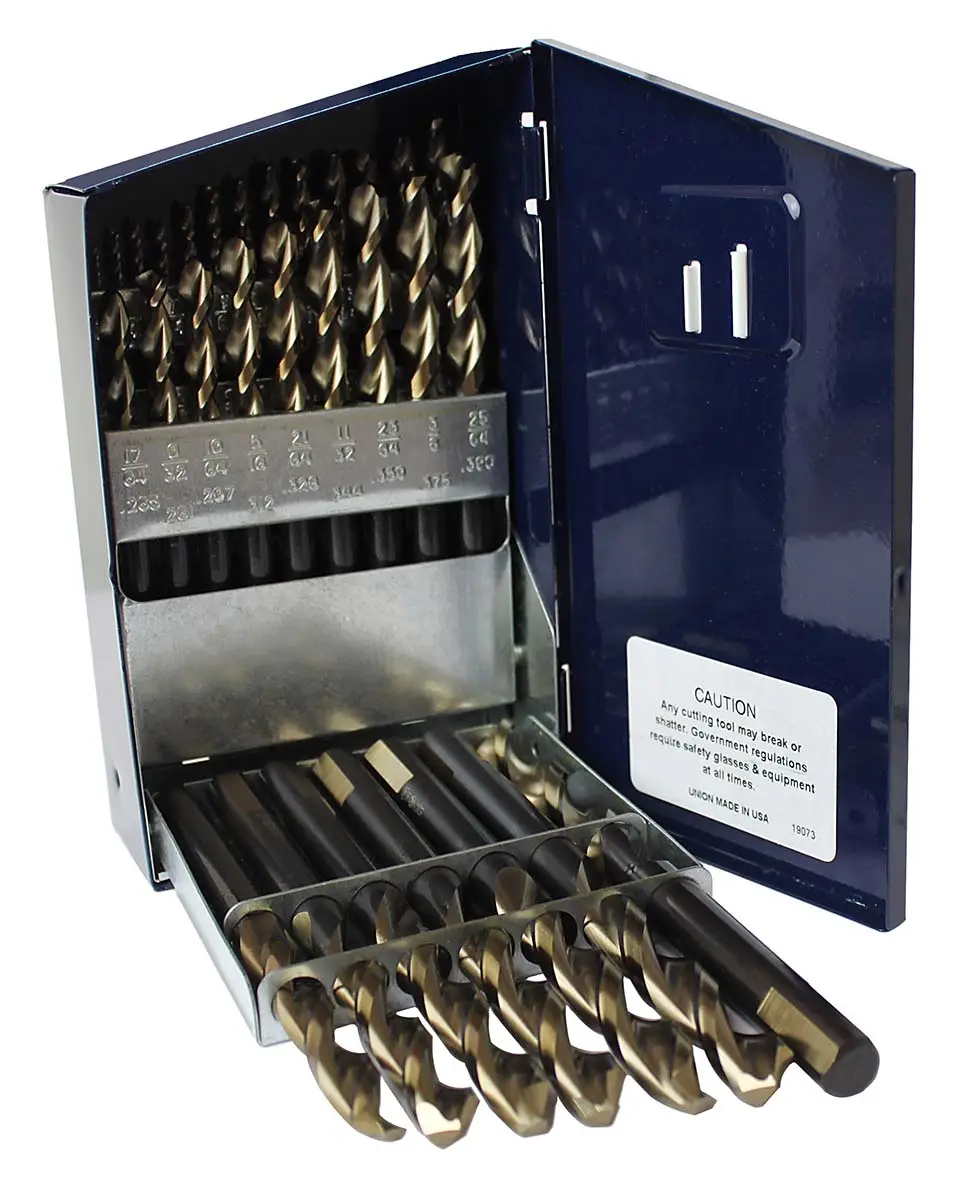
MagnaForce Deep Hole Drills
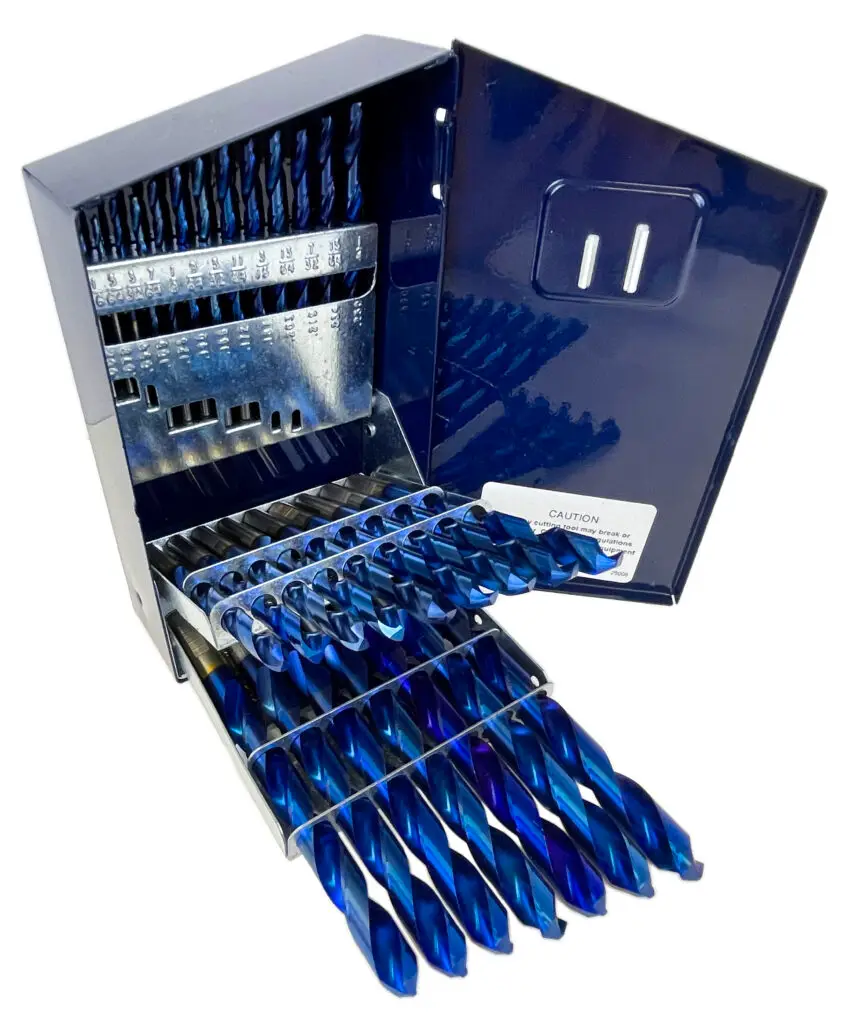
Kwik Cut® Durablue™

Quick Selection Guide: What to Use for Your Job 

To get the best results, your tooling and geometry must match your specific material, hole volume, and equipment setup:

  • Drilling Aluminum, Wood, or Plastics: Gold finished drills are the standard for these materials.
  • Drilling Cast Iron or Ductile Iron: Black oxide treatment is ideal for these materials due to its corrosion resistance.
  • Drilling 400 Series Stainless Steel: Cobalt drills are recommended for these demanding applications due to their ability to withstand high-heat drilling jobs.
  • Drilling High Tensile Strength Materials: Cryonitride treatments provide excellent resistance to brittleness and breakage.
  • Hand-Held vs. Production Drilling: 118° split points require lower axial thrust and are ideal for hand-held drills, whereas 135° split points handle tougher materials and provide less deflection on curved surfaces. Additionally, 118° drills are better suited for jobs over a quarter-inch.

Beyond surface treatments and general material compatibility, factors like point angle geometry, substrate quality, and feed rate settings dictate how a drill performs under load. Additionally, examining how tip designs and coatings interact with speeds and hardness helps fine-tune tool operations for efficiency. 
Tip Geometry

A drill bit’s point angle determines how it enters material, how much thrust is required, and how well it resists wear. There are two types you will most likely see1:

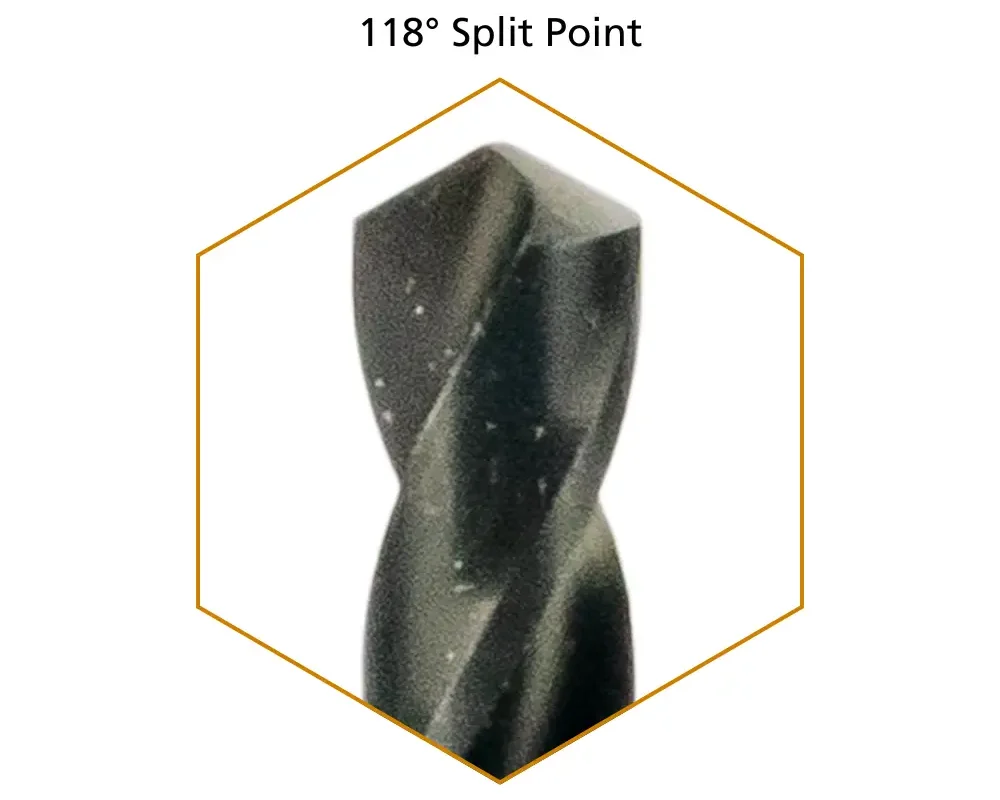
118° Split Point
  • Characteristics: Sharp and aggressive cutting action suited for general-purpose drilling in softer materials.
  • Advantages: Requires less axial thrust, making it the ideal choice for hand-held drills.
  • Limitations: The sharp edge dulls and wears faster than a 135° point. It is prone to walking on slippery, angled, or curved surfaces, which poses a safety risk to operators.
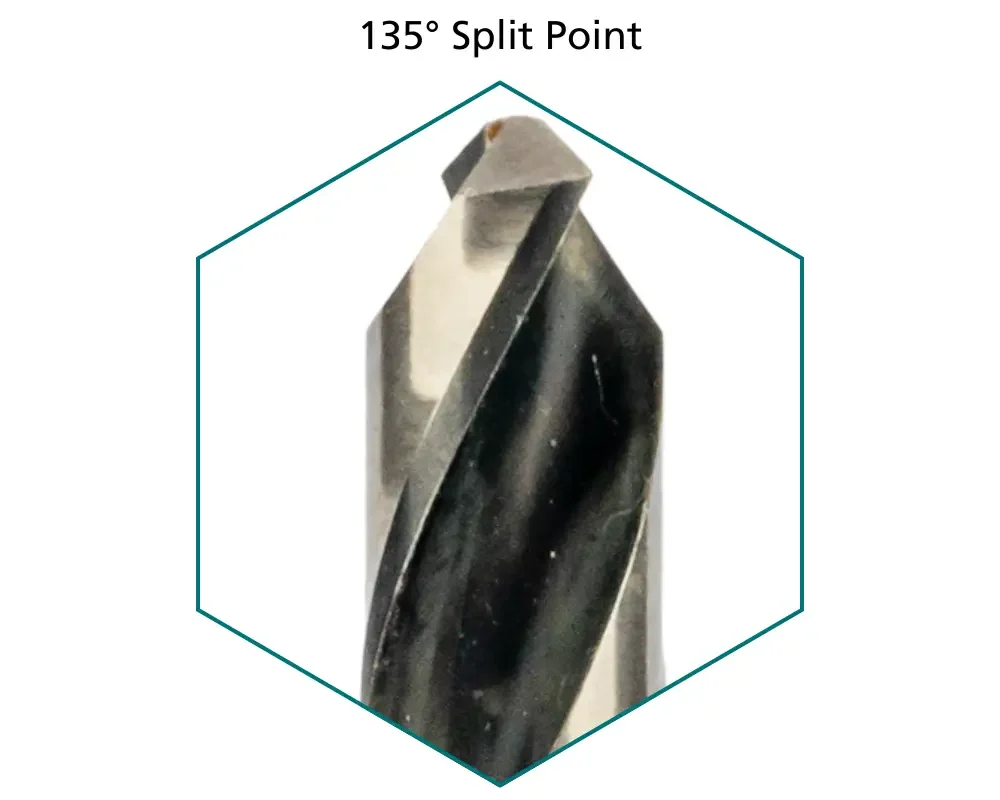
135° Split Point
  • Characteristics: Features a wider tip angle that provides stronger support behind the cutting edge.
  • Advantages: Highly durable under heavy loads, staying sharp longer when drilling tough alloys. Its higher rigidity reduces bit deflection, making it safer and more accurate on curved or slippery surfaces.
  • Limitations: Requires higher axial thrust to penetrate material compared to a 118° point.

The critical consideration here should be hole depth. For jobs less than a quarter of an inch, 135° split point would be ideal. Anything deeper than that would be better with 118° split point.

Drill Coatings

Coatings reduce friction, dissipate heat, and protect cutting edges from premature wear. Choosing a bit with a specialized coating can make a massive difference in tool life and hole quality. Consider the materials and the demands of your task to make the best choice.2

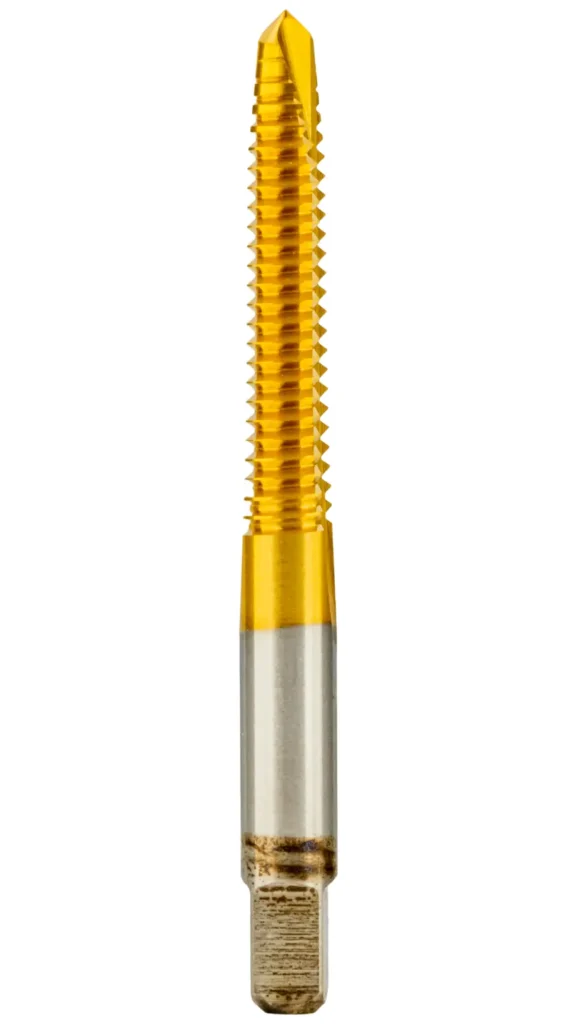
  • TiN (Titanium Nitride): A general-purpose, bright-gold coating that provides high surface hardness. Performs well in all types of steel at low-to-medium speeds and can extend tool life 4 to 6 times in mild steel.
  • TiAlN (Titanium Aluminum Nitride): A black or dark-gray coating built for high-speed, high-temperature milling and drilling in hard materials.
  • TiCN (Titanium Carbon Nitride): A pink or rose-colored coating harder than TiN. Offers excellent impact resistance—ideal for interrupted cutting—in steel and non-ferrous metals at low-to-medium speeds. Degrades at temperatures above 700°F.
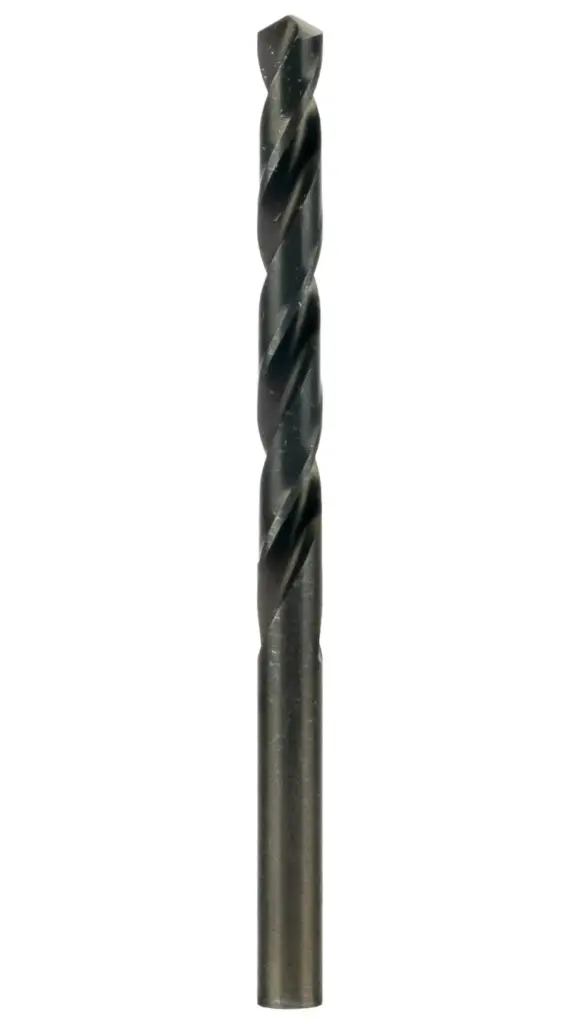
  • Black Oxide: An economical surface treatment that provides light corrosion resistance and minor lubricity. Black oxide is ideal for cast iron or ductal iron jobs.
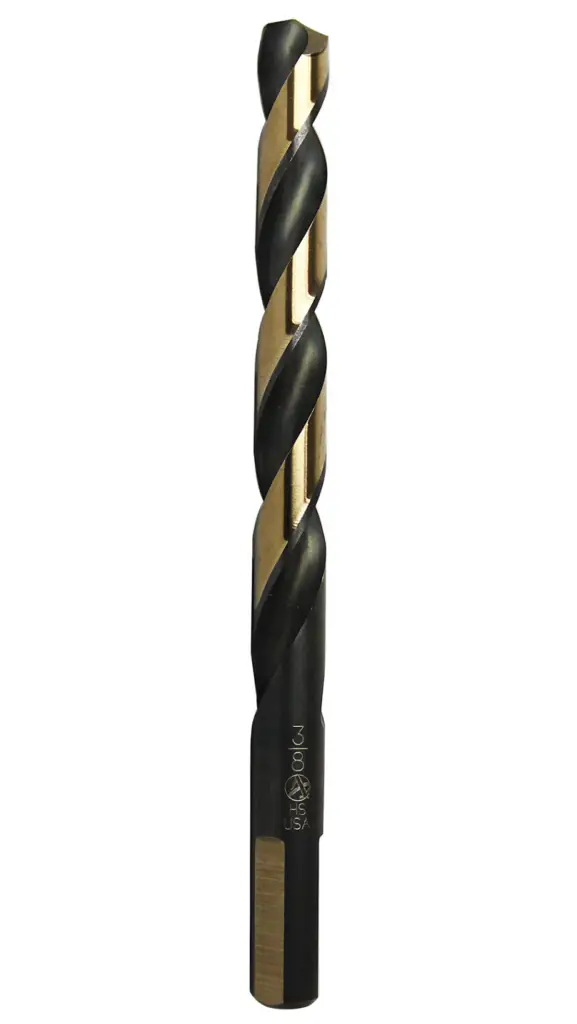
  • Black & Gold (Kwik Cut Drills): A surface treatment engineered to reduce chip welding and enhance lubricity, allowing bits to run cooler and last longer.

Note: In some instances, resharpening a drill bit can extend the tool life. But resharpening a bit with a special coating will remove that coating.

Drill bit with a titanium nitride coating, it appears a bright golden yellow color.
Titanium Nitride
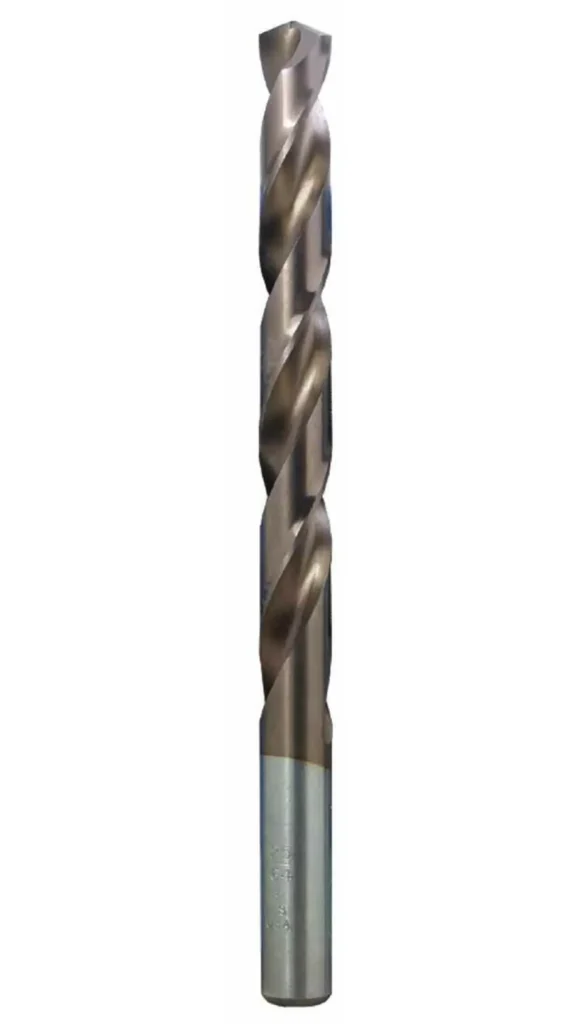
Drill bit with titanium carbon nitride coating. It appears to be a gray color with warm undertones.
Titanium Aluminum Nitride
Drill bit with titanium aluminum nitride coating. It appears a cool gray color.
Titanium Carbon Nitride
Drill bit with a gold coating. It appears a dark gold and black color.
Gold
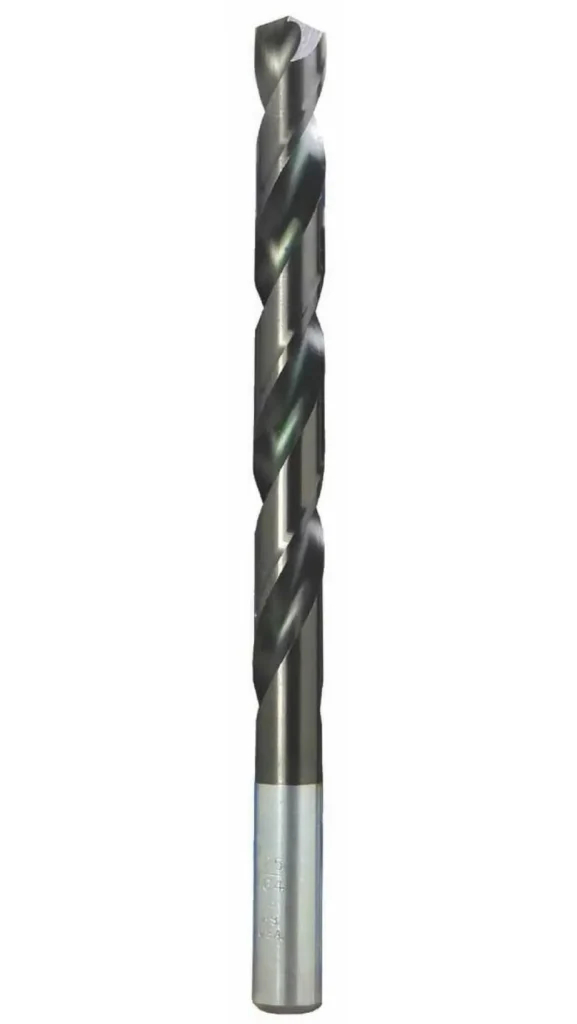
Drill bit with a black oxide coating. It appears a dark gray color.
Black Oxide

Feed Rate Optimization

Feed rate (inches per revolution, or IPR) directly dictates chip load, thrust requirements, and heat buildup. Managing your drill motor type, hole depth, and volume of holes is vital to preventing work-hardening and premature bit failure.

1. General Rule of Thumb

  • Standard Feed Calculation: Base feed equals .001″ per revolution for every 1/16″ of drill diameter (+.001″ on the overall total).
  • Speed Adjustments for Hardness: Base speed starts at 80 SFM (Surface Feet per Minute) for materials with 100 Brinell hardness; reduce speed by 10 SFM for every additional 50 Brinell points.
  • Deep Hole Drilling: Reduce both feed rate and cutting speed by 45% to 50% when drilling holes deeper than 4 times the drill diameter to prevent chip clogging and bit binding.3

2. Recommended Feeds by Drill Diameter

Drill Diameter Range 

Feed Rate (Inches Per Rev) 

Under 1/8″ 

.001 to .003  

1/8″ to 1/4″ 

.002 to .006  

1/4″ to 1/2″ 

.004 to .010  

1/2″ to 1″ 

.007 to .015

1″ and Over 

.015 to .025  

3. Application Strategies: Alloy Steels vs. Stainless Steels

Alloy Steels 
  • Operating Parameters: Run general alloy steels at 50–75 SFM. Hardened alloy steels (300–400 Brinell) require lower speeds of 20–30 SFM.  
  • Chip Management: Long, stringy chips are common. Increasing the feed rate while slightly reducing speed helps curl and break chips cleanly. Use heavy-duty bits for tough alloy grades.  
Stainless Steel 
  • Free-Machining Grades: Drill at 60–100 SFM using medium feed rates.  
  • Work-Hardening Grades (200/300 Series & Chrome-Nickel): Lower speeds to 15–40 SFM using light-to-medium positive feeds.  
  • Preventing Work Hardening: Never let the bit dwell or cut with insufficient pressure. Doing so creates localized hard spots that rapidly dull or flake the drill’s outer cutting edges. Maintain continuous, steady pressure to keep the cutting lip underneath the work-hardened layer 

Take a look at our catalog for drill feed and speed reference charts. 

Choosing the right combination of point geometry, high-performance coatings, and optimal feed rates is the key to extending tool life, reducing downtime, and maintaining clean, accurate cuts in demanding materials. Whether you are drilling tough alloy steels or work-hardening stainless grades, matching your bit selection to the specific application directly impacts your productivity and bottom line. 

If you need a reliable drill bit supplier, consider Applied Maintenance Supplies & Solutions. Our team of experts can help you evaluate your workplace setup and select the perfect drill bit for any job. Contact us today to optimize your drilling operations and maximize tool performance!